IROS 2026 · Pittsburgh · Sept 27 — Oct 1

Can a humanoid
assemble a flat‑pack
on its own?

Platform
Unitree G1
Furniture
IKEA UTTER table
Edition
Inaugural
Format
Live at venue
FREE registration Live assembly at the venue G1 hardware provided on-site Sim access months ahead

The challenge

IKEA UTTER children's table

Same parts, every team. Twist-on legs, hand-tight only — the difficulty floor is bimanual coordination and 3D spatial reasoning, not fasteners.

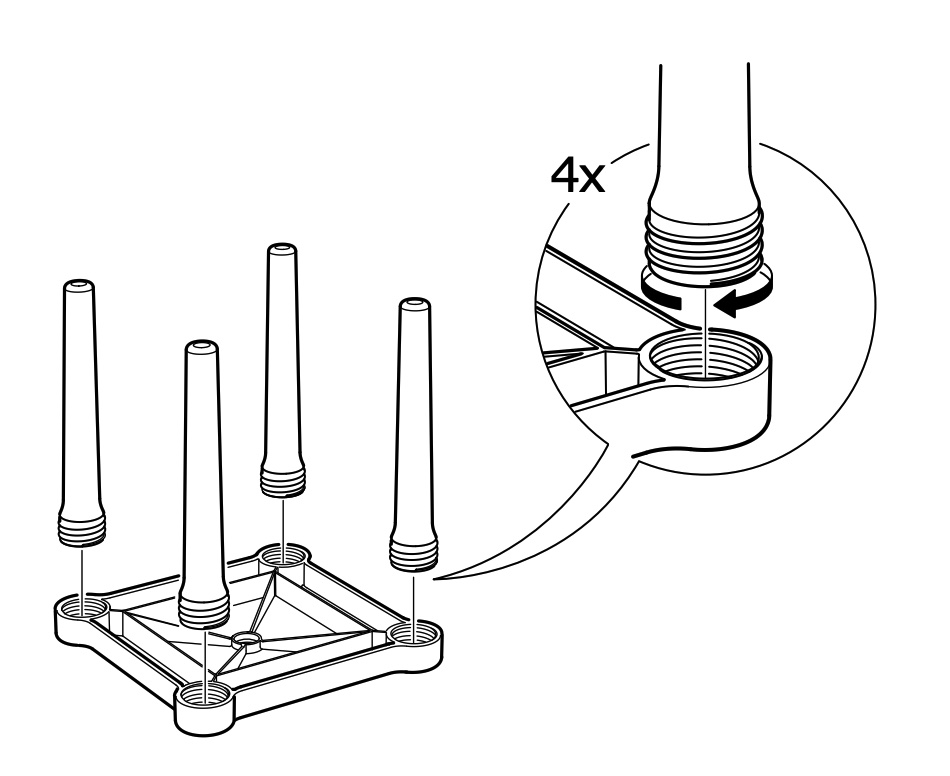
UTTER assembly instruction sheet 1
UTTER assembly instruction sheet 2
Official IKEA UTTER · view on ikea.com →
Challenge Rules

Scoring

Teams compete on the AI policy driving the G1 — no teleop, no human steering. Each run is judged on outcome and time, against a human reference run on the same parts and scene.

  • 1 autonomous run
  • Live assembly at the venue
  • Same parts
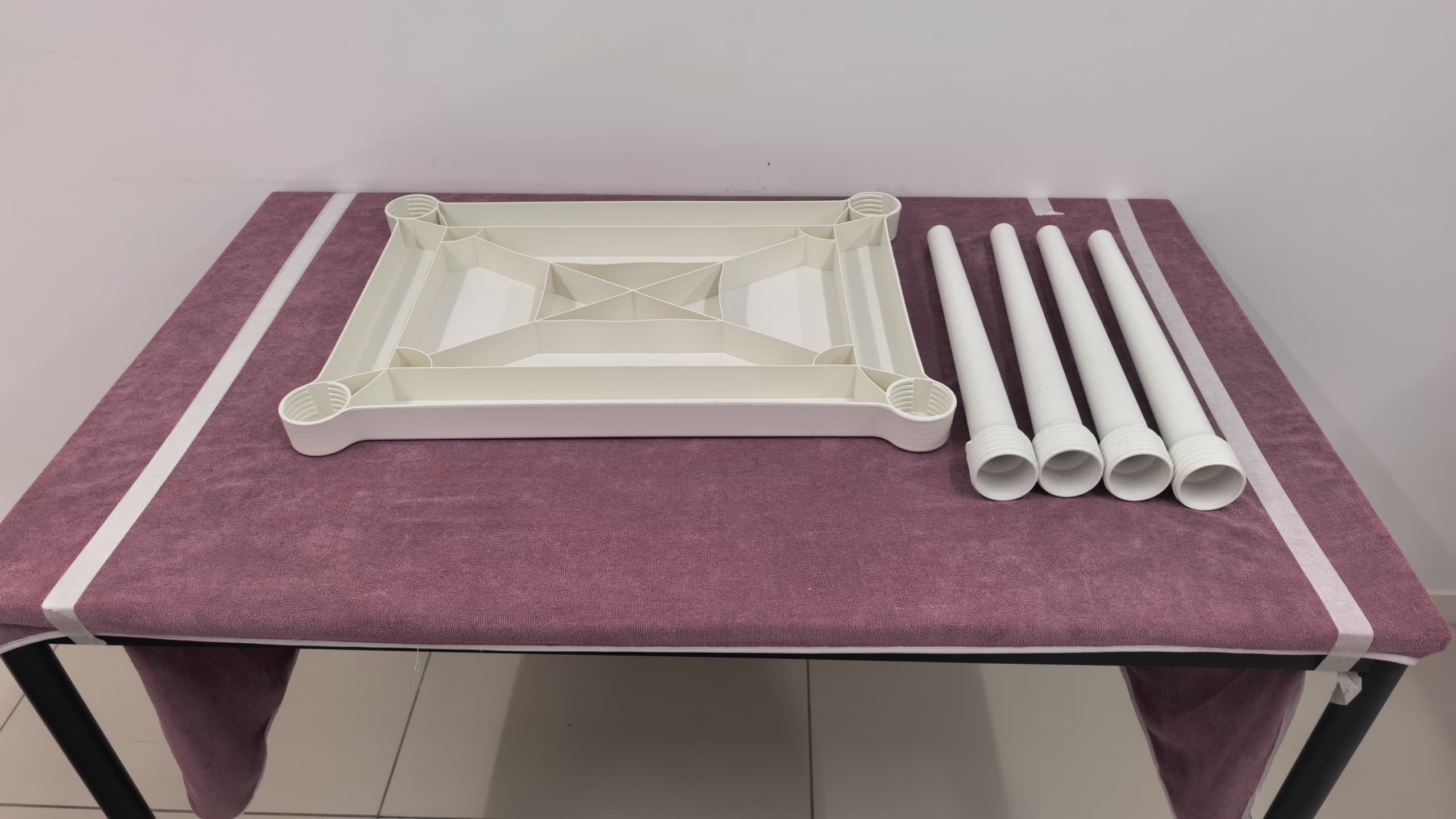
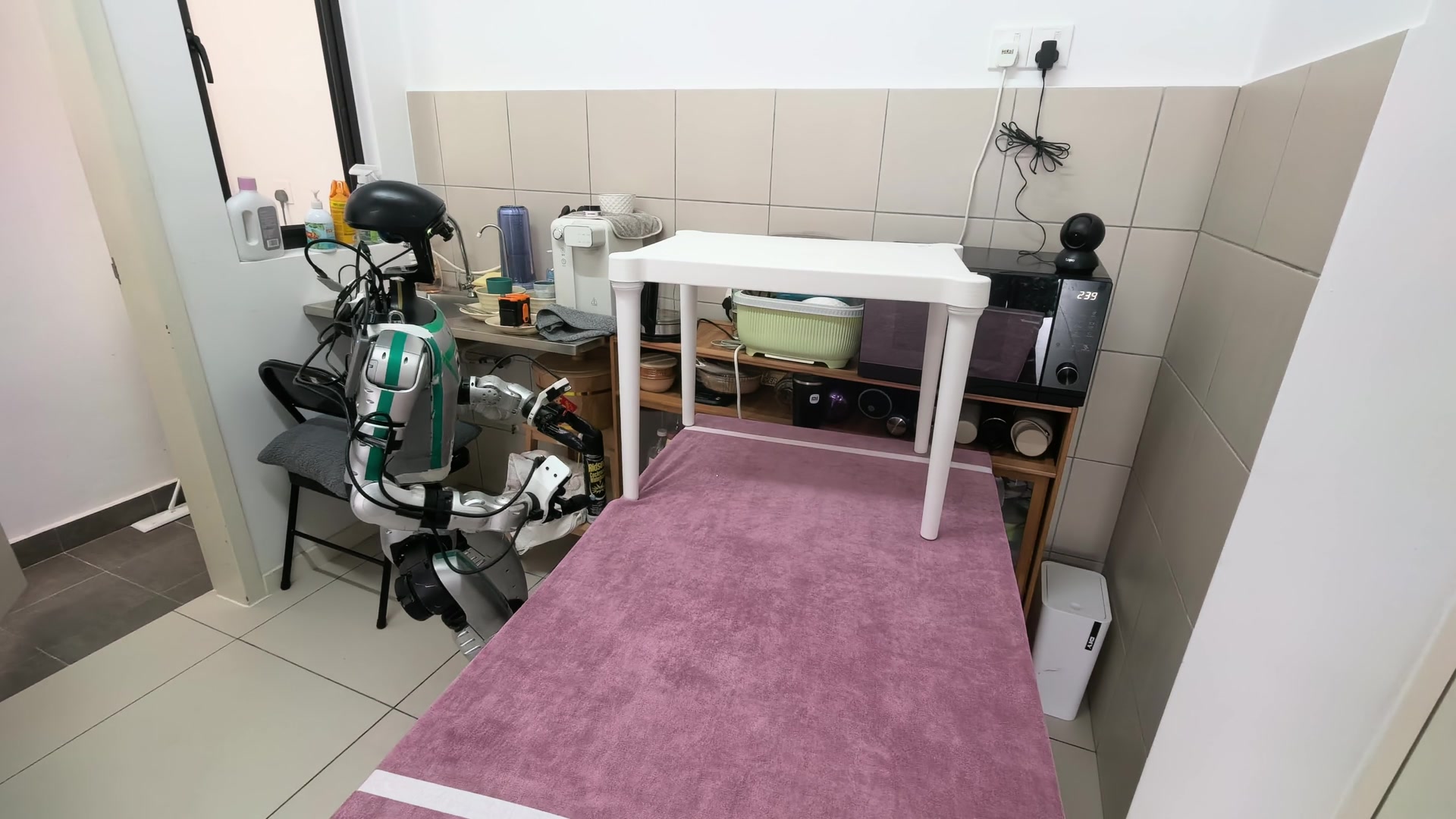
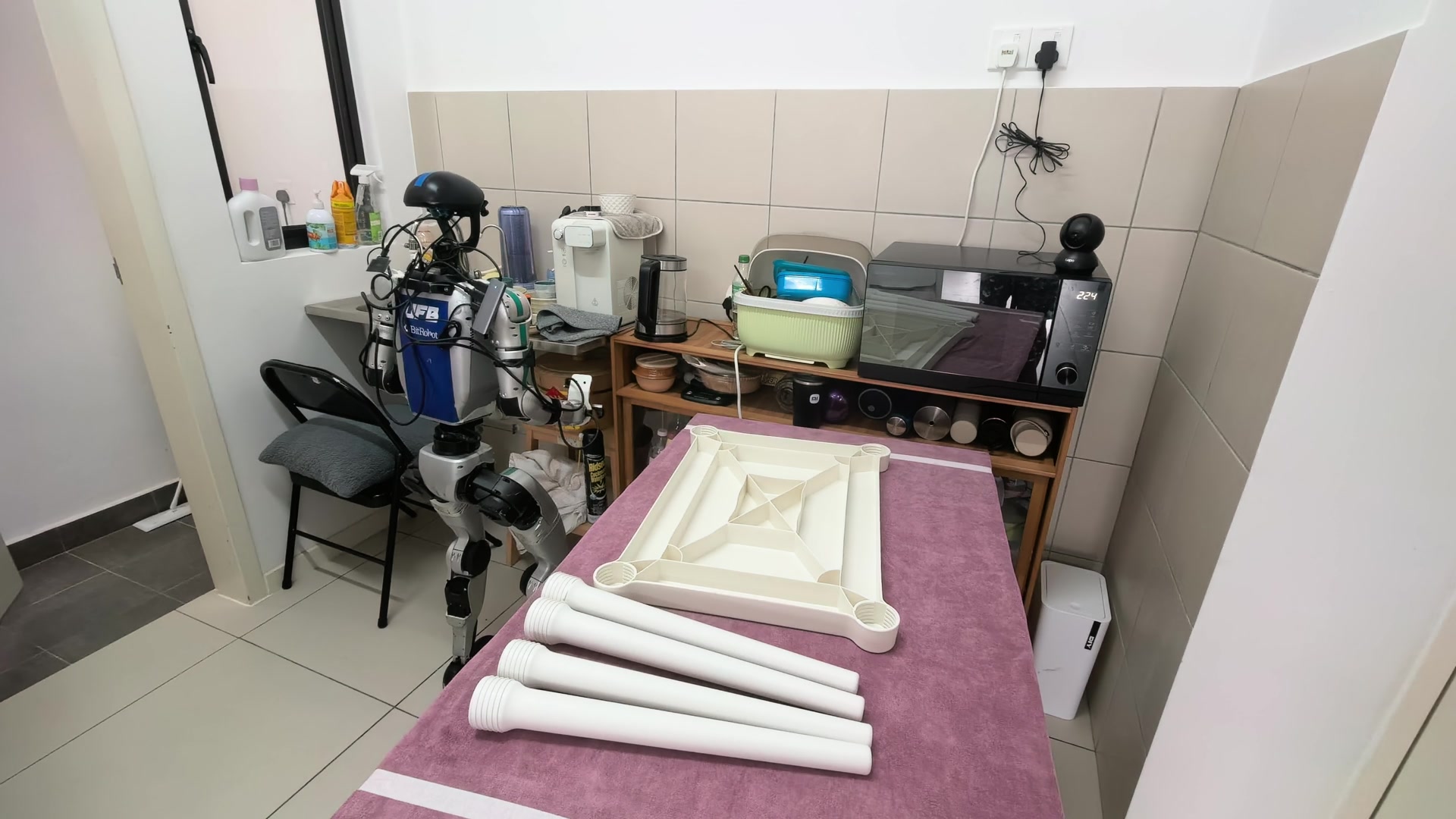
  1. Parts laid out before assembly
    00Initial state
    Initial
    Parts laid out, ready to begin.
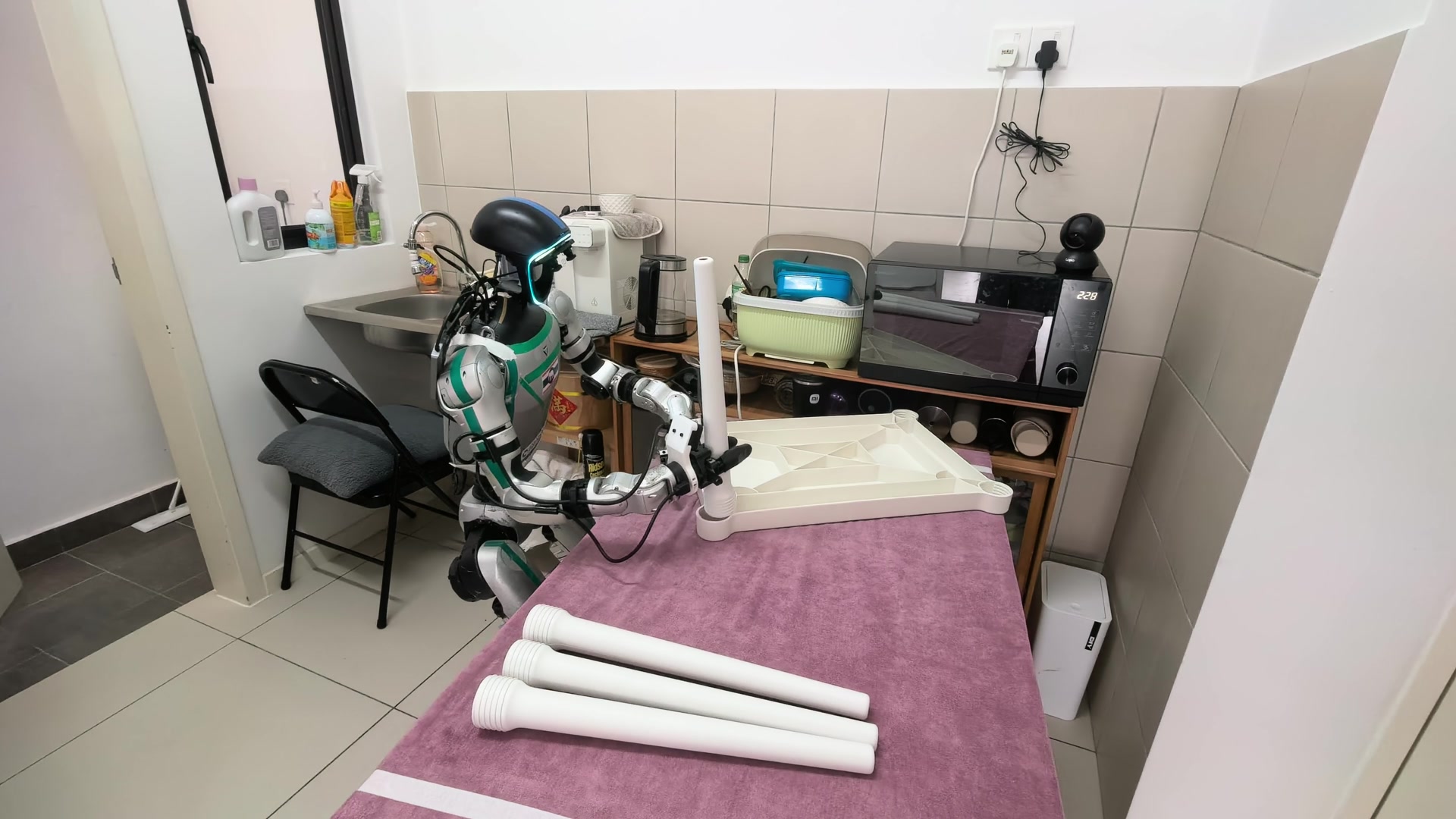
  2. Robot identifying parts
    01Checkpoint
    Inventory
    Parts identified and staged.
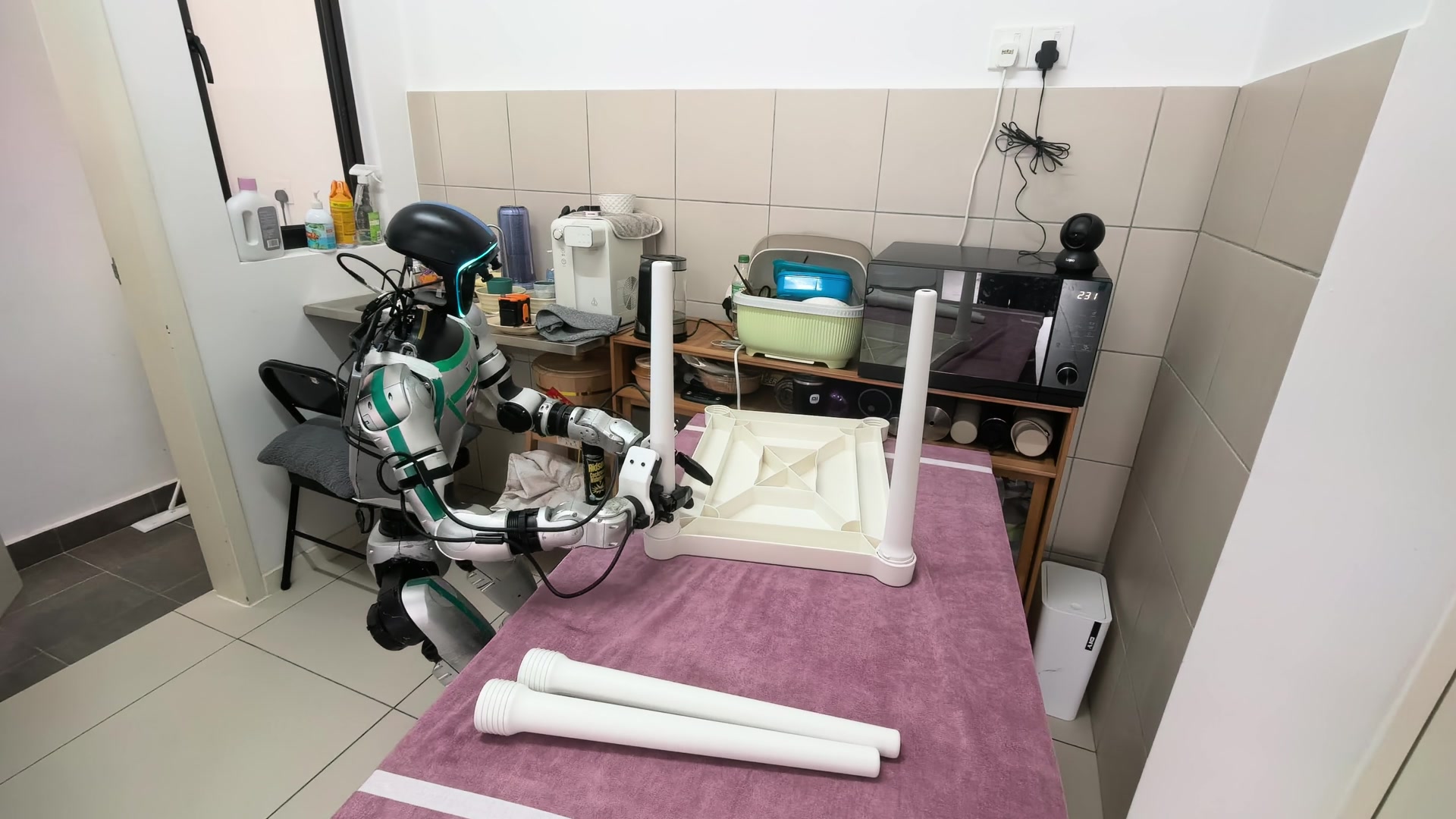
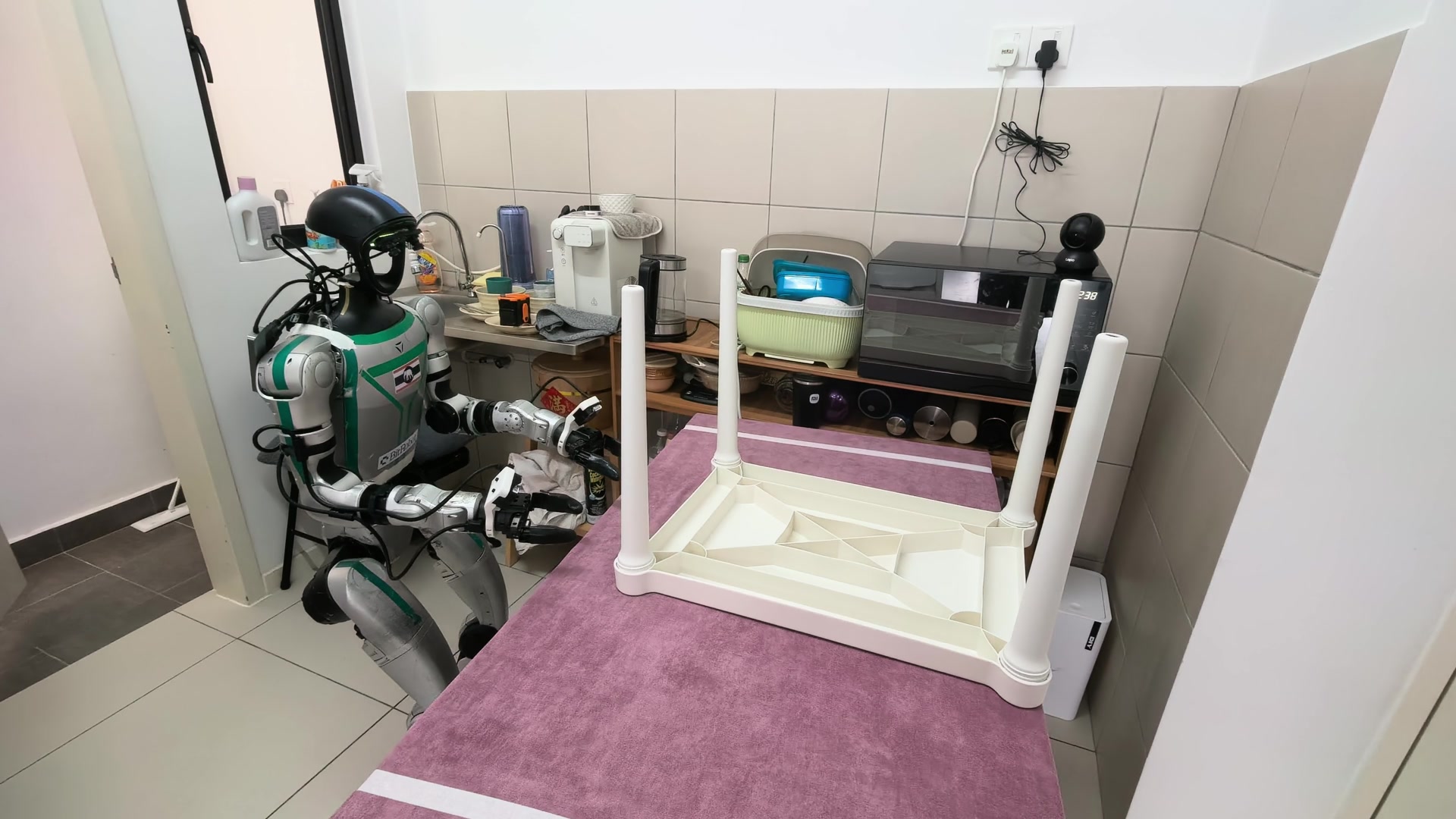
  3. Legs attached to the top
    02Checkpoint
    Partial
    Legs attached to the top.
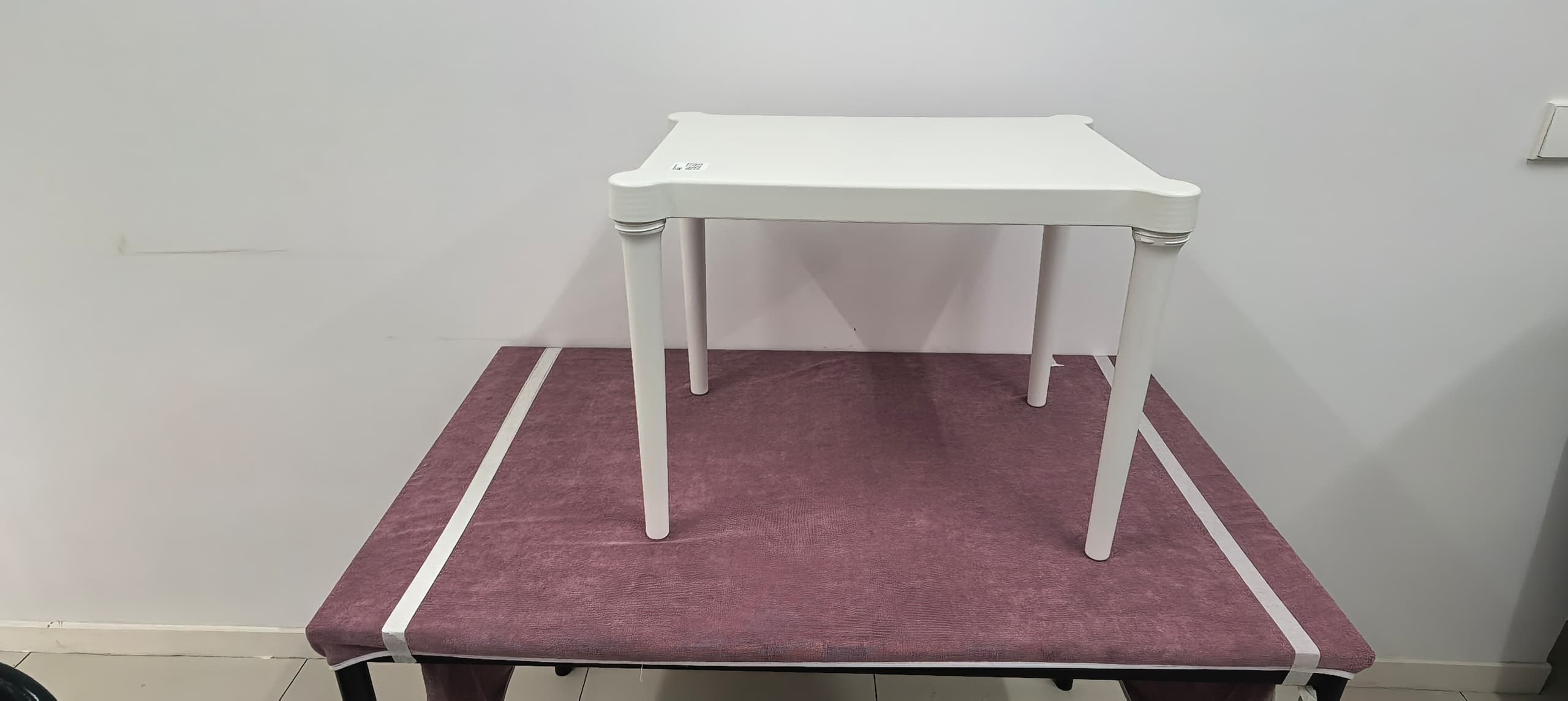
  4. Table fully assembled
    03Checkpoint
    Final
    Table assembled per IKEA spec.

Resources

Three resources released before the event: a real-world dataset, a high-fidelity simulation environment, and remote-lab access for policies that need real-robot validation.

Episode — table assembly action
Episode — table flip
Episode — legs
Episode — setup

Datasets

500+ teleoperated G1 episodes

A shared dataset of teleoperated G1 episodes performing the UTTER table assembly task. Use it to bootstrap policies before sim or remote-lab evaluation.

  • 500+ episodes
  • Released ahead of the event

Simulation

G1 + UTTER scene · standardized

A high-fidelity simulation environment identical to the venue setup. Train policies, iterate on contact-rich behaviors, and evaluate against the same Inventory · Partial · Final checkpoints used on the floor.

  • Unitree G1 model
  • UTTER parts physics
  • Scene + lighting matched to venue
  • Inventory · Partial · Final checkpoints

Real-world eval

Remote G1 labs · Singapore + Shenzhen

Teams without on-site G1 hardware submit policy checkpoints to organizer-hosted G1s and receive a real-world score report before the venue. Lowers the hardware barrier without changing the rules.

  • 2 lab locations: Singapore + Shenzhen
  • Submission queue with score report
  • Identical scene mirror
  • Open in the months ahead of the event

Organizers

Jie Tan

Jie Tan

Google DeepMind
Yuchen Xiao

Yuchen Xiao

Unitree
Steve Xie

Steve Xie

Lightwheel
Michael Cho

Michael Cho

Frodobots
Yinbei Li

Yinbei Li

SIT
Santiago Pravisani

Santiago Pravisani

Frodobots

Partners

FAQ

Do I need my own G1 to compete?
No. Hardware is provided on-site. Teams without physical access can submit policy checkpoints to organizer-hosted G1s in Singapore and Shenzhen for real-world evaluation feedback in the months ahead of the event.
Can I use teleoperation?
No. The run is fully autonomous. A human assist is allowed — it counts as an intervention and reduces the score per touch — but the run continues. Damage to parts, the robot, or the scene ends the run.
Can we use the released dataset for training?
Yes. The 500+ episode dataset is provided for training and policy bootstrapping. The simulation environment is the reference for sim-side iteration; both are released before the event.
Is the scene revealed before the event?
Yes. The same shared scene is available in simulation before the event and used on the venue floor — same surface, same parts, same layout.

Registration

Registration opens soon

Complete the form and we'll notify you when everything goes live — sim, dataset, remote labs, registration.

Tell us about your team. We'll be in touch with simulation access, the dataset link, and the call-for-teams when it opens.

Open the form →
EditionInaugural · 2026
VenuePittsburgh, PA
DatesSept 27 — Oct 1
CostFree
Team sizeUp to 6